Broad Genomic Testing Linked to Longer Survival in Advanced Lung Cancer According to New Study in JNCCN
PLYMOUTH MEETING, Pa., Nov. 12, 2026
Press Release Disclaimer: This is a press release distributed through the XPR Media network. It has not been independently verified by our newsroom.
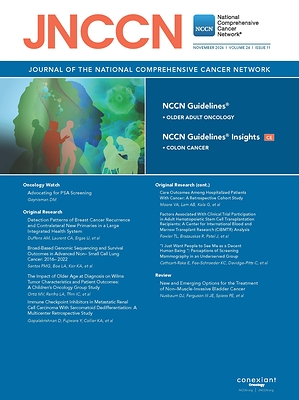

Broad Genomic Testing Linked to Longer Survival in Advanced Lung Cancer According to New Study in JNCCN
PR Newswire
PLYMOUTH MEETING, Pa., Nov. 12, 2026
Researchers found comprehensive biomarker testing before starting treatment for advanced lung cancer, as recommended in the NCCN Guidelines, was associated with patients living longer.
PLYMOUTH MEETING, Pa., Nov. 12, 2026 /PRNewswire/ — New research in the November 2026 issue of JNCCN—Journal of the National Comprehensive Cancer Network found that patients with advanced non-small cell lung cancer (NSCLC) lived longer when they received broad-based genomic sequencing (BGS)—testing a large panel of dozens or hundreds of genes at once—before starting treatment, compared with patients who received more limited biomarker testing of just one or two genes.
The study analyzed real-world data from the Flatiron Health Research Database, including more than 35,000 patients treated in community and academic oncology practices across the United States from 2016 to 2022. BGS before first-line therapy was associated with a two-month average increase in overall survival, and modest improvement in progression-free survival, likely because it helped identify a wider range of tumor biomarkers that could guide targeted treatment. According to the study, 19% of BGS recipients received targeted therapy, compared to 16% of those in the narrow testing group.
“Our findings and prior work suggest broad-based genomic testing should be the default for patients with advanced lung cancer and should ideally happen prior to the administration of first-line therapy,” said co-senior author Ravi B. Parikh, MD, MPP, Emory University School of Medicine and Winship Cancer Institute. “The right test, done early, can open doors to treatments that might otherwise be missed.”
The NCCN Clinical Practice Guidelines in Oncology (NCCN Guidelines®) for Non-Small Cell Lung Cancer recommend BGS in the advanced/metastatic setting. Common biomarkers, such as EGFR, ALK, ROS1, KRAS G12C, MET, RET, and BRAF can help doctors match patients to targeted therapies that may work better and are easier to tolerate.
“While it may seem obvious that broad genomic sequencing of tumors leads to the use of more targeted therapies and ultimately better outcomes compared to focused biomarker testing, this can be difficult to prove without large numbers of patients from multiple different health systems over long periods of time,” noted Heather Hampel, MS, CGC, Associate Director, Division of Clinical Cancer Genomics, City of Hope, who was not involved with this research. “This study is helpful because it utilizes electronic health data to show that broad-based genomic sequencing was associated with improved survival in patients with advanced non-small cell lung cancer and leads to higher biomarker directed targeted therapy use in the matched first-line analysis compared to focused biomarker testing. This also avoids use of other therapies that may be less effective or even harmful.”
Lead author Patricia Mae G. Santos, MD, MS, Emory University School of Medicine and Winship Cancer Institute concluded: “Coverage should match the evidence; we need to make sure that access to that testing doesn’t depend on insurance, provider, or location. And if you or someone you love is diagnosed with advanced lung cancer, ask your care team one question before treatment starts: ‘Has my tumor had comprehensive biomarker testing?'”
To read the entire study “Broad-Based Genomic Sequencing and Survival Outcomes in Advanced Non–Small Cell Lung Cancer: 2016–2022,” visit JNCCN.org.
Free webinar will answer patient and caregiver questions on biomarker testing
Patients and families can learn more about the use of biomarkers in cancer care. On November 16, 2026, NCCN is hosting a patient webinar featuring Heather Hampel and other leading genomics experts. The live webinar, and recorded video that follows, will be available for free, thanks to support from the National Comprehensive Cancer Network Foundation (NCCNF). Visit NCCN.org/patient-webinars to register or watch.
About JNCCN—Journal of the National Comprehensive Cancer Network
More than 25,000 oncologists and other cancer care professionals across the United States read JNCCN—Journal of the National Comprehensive Cancer Network. This peer-reviewed, indexed medical journal provides the latest information about innovation and scientific studies related to oncology health services research, including quality care and value, bioethics, comparative and cost effectiveness, public policy, and interventional research on supportive care and survivorship. JNCCN features updates on the NCCN Clinical Practice Guidelines in Oncology (NCCN Guidelines®), review articles elaborating on guidelines recommendations, health services research, and commentary. JNCCN is published by Conexiant. Visit JNCCN.org for more information.
About the National Comprehensive Cancer Network
The National Comprehensive Cancer Network® (NCCN®) is a not-for-profit alliance of leading cancer centers devoted to patient care, research, and education. NCCN is dedicated to defining and advancing quality, effective, equitable, and accessible cancer care and prevention so all people can live better lives. The NCCN Clinical Practice Guidelines in Oncology (NCCN Guidelines®) provide transparent, evidence-based, expert consensus-driven recommendations for cancer treatment, prevention, and supportive services; they are the recognized standard for clinical direction and policy in cancer management and the most thorough and frequently-updated clinical practice guidelines available in any area of medicine. The NCCN Guidelines for Patients® provide expert cancer treatment information to inform and empower patients and caregivers, through support from the NCCN Foundation®. NCCN also advances continuing education, global initiatives, policy, and research collaboration and publication in oncology. Visit NCCN.org for more information.
Media Contact:
Rachel Darwin
267-622-6624
darwin@nccn.org

 View original content to download multimedia:https://www.prnewswire.com/news-releases/broad-genomic-testing-linked-to-longer-survival-in-advanced-lung-cancer-according-to-new-study-in-jnccn-302937927.html
SOURCE National Comprehensive Cancer Network